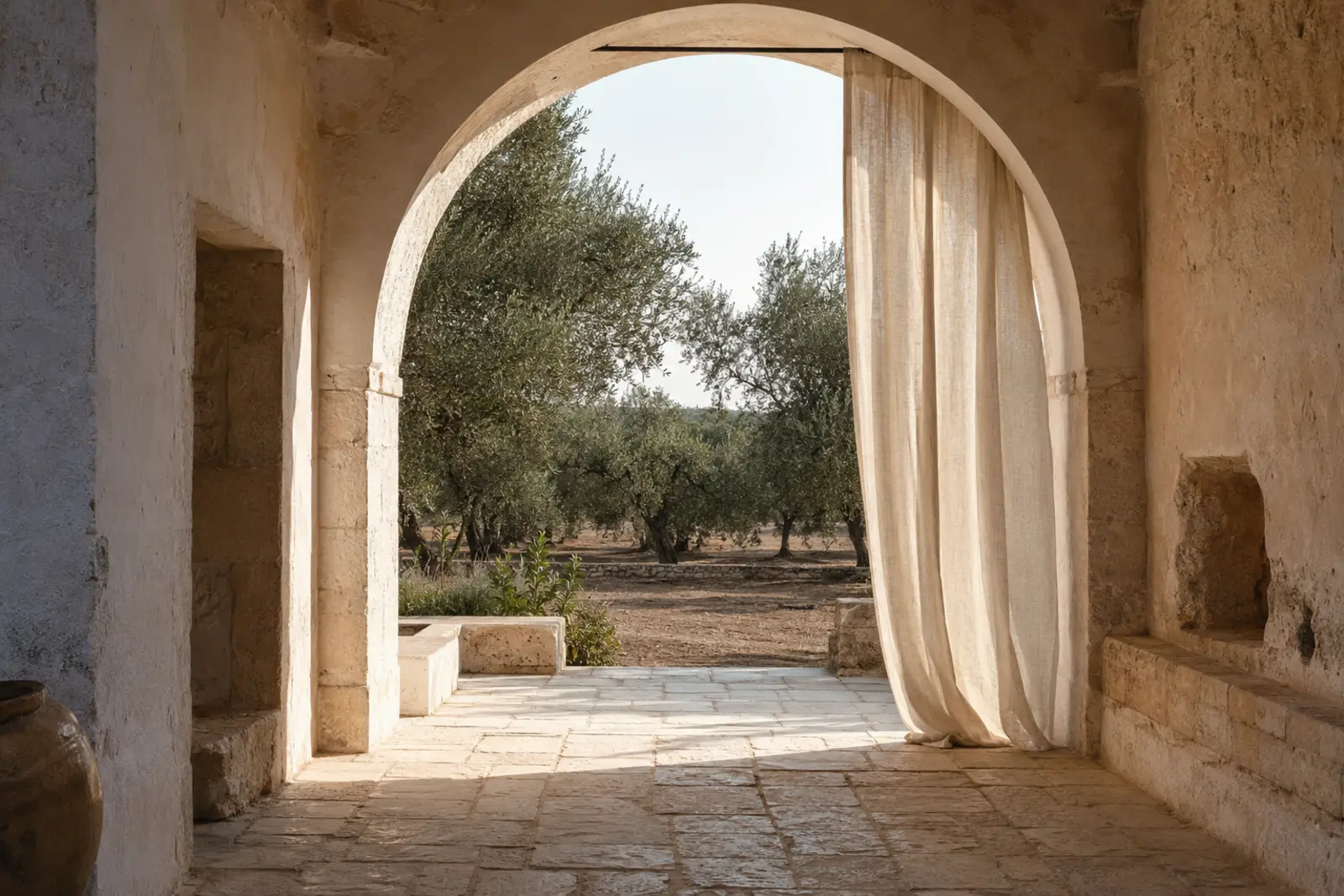
A building can be distinctive without competing with its setting. The quieter approach begins by reading climate, views, ground levels, vegetation and the patterns that already give a place its identity.
Begin with orientation
Sun, wind, privacy and arrival shape the plan before style enters the conversation. Good orientation can improve comfort and reduce the amount of technology needed to correct poor fundamentals.
“Belonging is designed through relationships: ground to wall, opening to view, material to climate.”
Let massing follow the ground
Breaking a large brief into related volumes can protect views, reduce apparent scale and create useful outdoor rooms. Retaining natural levels where possible also limits unnecessary excavation and visual disruption.
Use a disciplined material language
A small family of durable materials often creates a stronger relationship with place than a catalogue of finishes. Their colour, texture and weathering should be tested in the actual light of the site.
Sample editorial copy—not professional construction, design or specification advice. Replace it with the publishing company’s own verified expertise.